The Gate Is Part of the Hunt: A Public-Land Access Check for Changing Seasons

The Gate Is Part of the Hunt: A Public-Land Access Check for Changing Seasons

Smooth Sailing to Your Next Public Land Hunt

Get Informed Before You Head Out

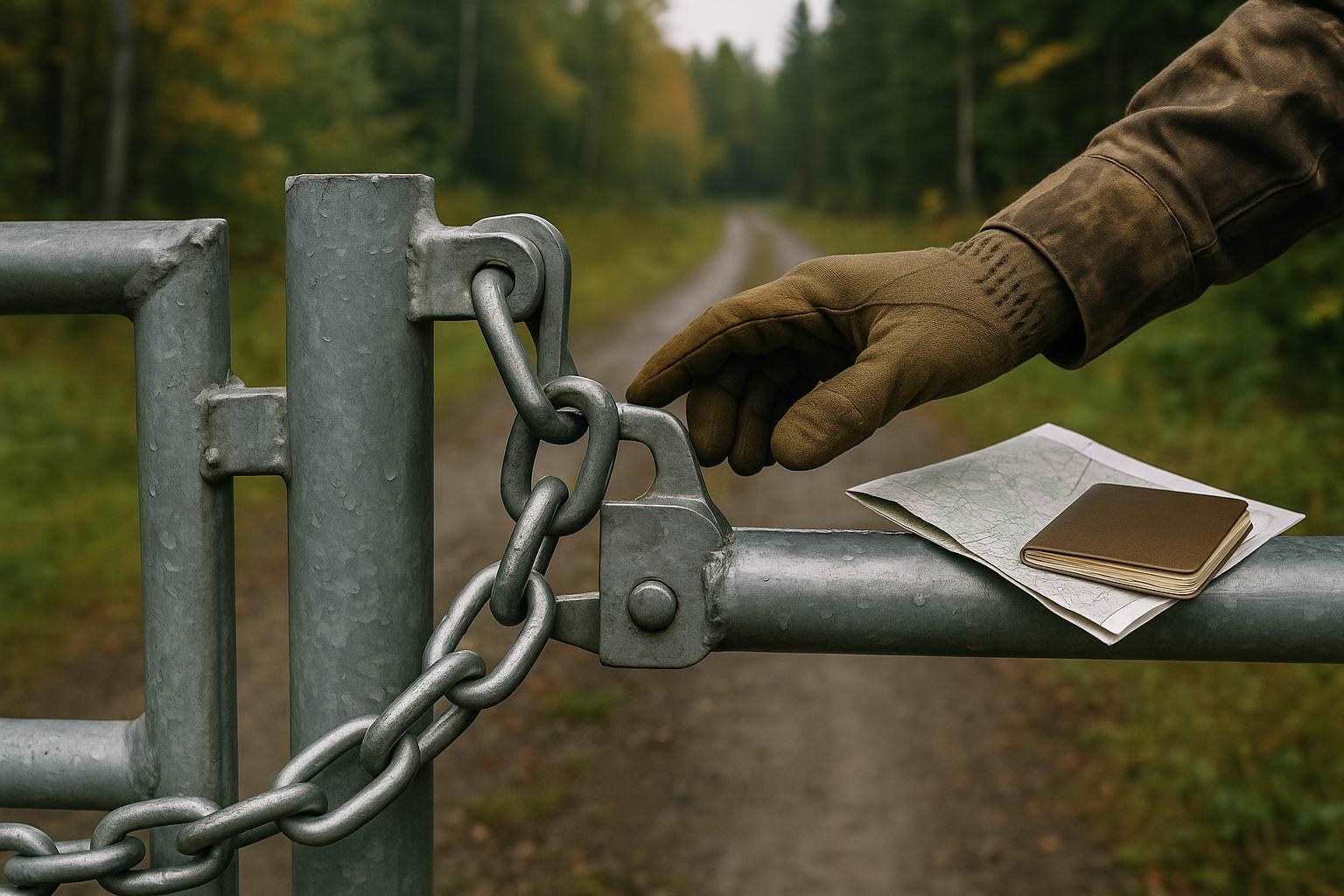
A successful hunting trip doesn't begin when you put on your gear. It starts before that with careful planning. One of the important parts of that planning is understanding how to access the land you want to hunt. A simple metal gate can stop your progress in its tracks. Turn what should be an exciting day into a frustrating one. A road that looks open on a map might be blocked due to weather or rules. You might be driving down a path that seems perfect only to find it's not allowed. That's why knowing your access routes ahead of time makes a difference. It improves your experience. Helps protect the wildlife and the land.

Know the Rules of the Land

Getting a hunting license is important. It doesn't give you the right to go anywhere on public land. Every area has its rules about how you can get in. Some places have road closures. Some allow vehicles at certain times. Others require permits especially if the land borders private property or is managed by different groups. These rules can change even after maps are printed. So always double-check your access information. Keep a printed copy with you. Don't rely only on what's online. If you're unsure call the land management office. Don't assume a gate you've used in seasons is open now. Gates can be locked depending on the time of year. Be ready to change your parking spot or your route based on what you find.

Have a Backup Plan

When you plan your trip don't rely on one way in. Always have a plan. You might think you know the road to take but it could be blocked. That's why it's smart to know a few routes to your destination. Study the maps. Learn the roads around the area. Look for hazards like creek crossings or soft ground that can be dangerous. The closest access point might not be the best choice. Pick a route that gives you the chance to get back safely especially if you're hunting in low light. Consider how much traffic is on the roads and how heavy your gear is. A long hike with a backpack can be tough. Use maps-the digital ones are helpful. Don't trust them completely. Cell service can fail in spots. Always have a paper map as a backup.

Respect Access Points and Private Land

Using land comes with responsibility. Be respectful of the access points. When you unload your gear don't block gates, narrow roads or entrances. Keep the area clear. It helps land managers. Makes it easier for emergency responders. It also helps people who are enjoying the outdoors. If you don't know where to park look for a designated spot. Don't just guess. You could end up parking in a place that's not allowed. Watch for property lines. Fences might be out of date. GPS can be off. If you're not sure where the line is, don't cross it. You don't want to trespass. Don't touch anything that's n't yours-no gates, no equipment, no game. If you need to open or close a gate do it carefully. Leave it exactly as you found it unless someone tells you to do

Gear Up for the Journey

The way you get to your hunting spot will influence what gear you need. If your hike is short a smaller pack might be enough.. If the road is rough or the trail is long you'll need to carry less weight. Don't make your trip harder than it needs to be. Bring a map, enough water for the weather a working phone or radio and safety gear. Check everything before you leave. Make sure your backpack straps work your shoes are secure. Your battery is charged. A small oversight can turn a trip into a bad one.

Don't forget your vehicle. Make sure it's ready for the trip. Check that you have fuel for the trip and the return. Make sure you're parked in a spot. Some areas don't allow parking in places. Parking in the spot can damage your vehicle or get you into trouble.

Your Departure Checklist

Before you leave write down a checklist. This helps you stay focused and remember things. Here's what to include:

- Check the season rules. Are certain firearms allowed? What game is in season? Are there access rules?
- Look at the borders of the land. Find out where you can park. Check if roads have changed or closed.
- Plan your route. Make a plan and at least one backup. Note your expected return time.
- Download maps for use. Charge your phone and radio.
- Check the weather. Bring water and clothes that match the forecast.
- Tell a friend where you're going. Give them your location, vehicle details. When you expect to be back.

Sometimes things don't go as planned. You might find a road closed.. That doesn't mean you have to cancel your hunt. Instead use it as a chance to change your plan. Being flexible and ready to try a route can make the difference, between a failure and a success. Access planning is often overlooked,. It's one of the most important parts of hunting. Take your time. Plan carefully. Be aware of your surroundings. When you do you'll have an experience and create memories that last.

Read More
The Pre-Season Habits That Make Hunting Days Run More Smoothly: A Checklist for Better Decisions

The Pre-Season Habits That Make Hunting Days Run More Smoothly: A Checklist for Better Decisions

An overlooked part of hunting preparation is confirming how you will get to and from the ground before the season starts. Check access permission, parking points, boundary lines, gates, and offline map coverage while there is still time to correct a mistake. That small exercise prevents rushed choices, trespass problems, and late returns caused by a dead phone or blocked route. A useful pre-season hunting checklist should do more than count equipment. It should reduce uncertainty, clarify limits, and leave room to make an ethical decision when conditions change.

Verify access before you plan a sit

Land access is not a detail to solve at dawn. Recheck permission with the landowner or manager, especially if the arrangement was informal or the property has changed hands. Public-land rules can also vary by unit, season, species, method, and access area. Mark boundaries on a paper map as well as a downloaded digital map; phone screens and batteries are unreliable planning tools by themselves.

Walk or review the route in daylight if possible. Look for new fences, active farm work, locked gates, posted areas, trail closures, and places where another user may reasonably be present. Do not assume last season's parking spot, trail, or permission remains valid.

Leave a simple plan with someone who is not in the field: destination, expected return, vehicle description, and what to do if you miss a check-in. It is not dramatic preparation. It is a practical response to poor signal, changing weather, and small delays that become larger after dark.

Read the rules close to the season

Regulations are part of the equipment. Confirm the current season dates, legal hours, licensing requirements, tags, permitted methods, reporting duties, blaze or visibility requirements, and any restrictions on bait, transport, access, or species identification. Requirements may change, so use current official guidance from the responsible wildlife agency rather than an old printed summary, memory, or a social media post.

Write down the rules most likely to affect a decision in the field. That may include a boundary between units, a weapon restriction, a tagging step, or a requirement to identify the target beyond reasonable doubt. Keep permits and identification where they are protected from weather but available for inspection.

If a rule is unclear, pause the plan and ask the agency before going out. Guessing is not a form of confidence. It can create a legal problem and undermine the conservation system that supports future seasons.

Inspect equipment by using it, not admiring it

A gear inspection should reveal failure before the field does. Check clothing for damaged seams, missing closures, and noisy materials. Examine boots for separated soles, worn tread, and leaks. Test headlamps with fresh batteries, then carry a backup light. Charge navigation devices and save maps for offline use, but keep a compass and know how to use it.

Inspect packs, straps, knives, calls, optics, water containers, and first-aid supplies. Replace cracked plastic, swollen batteries, flattened insulation, and anything that only works when handled gently. Run a short practice loadout at home. If the pack feels unbalanced, a buckle is difficult to reach, or an essential item is buried beneath optional gear, fix that arrangement before the season.

For firearms or bows, follow the manufacturer's safety guidance and applicable law. Check for obvious damage and arrange qualified maintenance when something is questionable. Do not improvise modifications or treat a familiar tool as automatically safe. Keep firearms unloaded during transport and storage as required, and maintain strict muzzle and target awareness whenever they are handled.

Set decision rules before pressure arrives

Ethical hunting depends on decisions made before excitement narrows attention. Define the conditions under which you will not take a shot or attempt a harvest: uncertain identification, poor visibility, an unsafe direction, an unsuitable range for your ability, an obstructed target, or an angle that may make recovery unlikely. The exact limits are personal and should be conservative.

Plan what happens after a hit. Carry the tools and clothing needed for a careful recovery, know the local reporting and tagging steps, and allow enough time to track or retrieve an animal without rushing. If the evidence is unclear, mark the last known location, search methodically, and seek appropriate help rather than abandoning the effort or assuming the outcome.

A short pre-season rehearsal can expose weak points. Review species identification, safe handling, field dressing needs, weather decisions, and how you will communicate if plans change. This is not about predicting every event. It is about making the right choice easier when fatigue, cold, darkness, or disappointment enters the equation.

Use the checklist to protect habitat, too

Preparation affects more than the person carrying the pack. Clean mud and plant material from boots, tires, and equipment before moving between areas when practical. Follow access restrictions around wetlands, crops, nesting areas, restoration plots, and other sensitive ground. Pack out every piece of tape, food packaging, and disposable material brought into the field.

Keep vehicle routes and staging areas to established surfaces where possible. Avoid widening trails, cutting vegetation for concealment, or disturbing cover simply to improve one setup. A small shortcut can damage soil and plants long after the season ends.

Use this single final check before departure:

- Access is confirmed, boundaries are understood, and a route plan is shared.
- Current regulations, permits, tags, and reporting requirements are checked.
- Clothing, footwear, lighting, navigation, first aid, and food or water are serviceable.
- The primary tool is inspected safely, and any questionable defect has been addressed.
- Target identification, shot or harvest limits, recovery plans, and return time are clear.
- Weather, habitat sensitivity, waste, and vehicle impact have been considered.

The best preparation may end with a decision not to go. Forecasts can turn unsafe, access can change, equipment can fail, or the conditions may not support a clean and responsible opportunity. Walking away protects people, wildlife, habitat, and the reputation of hunting as a conservation practice. That is not a missed chance. It is sound field judgment.

Read More
TOP